
Four people took the podium at the launch of Open World Foundation’s Strategic Plan 2026 to 2030: Our own Executive Director and Board Chairperson, the Government of Uganda, and the National Youth Council. Each spoke from a different seat, and each said something worth keeping. Here, in their own words, is what this plan means to the people who stood behind it.
Welcoming Guests, Opening a New Chapter
Executive Director Mr. Moses Asasira opened the program by placing the plan inside the story OWF has been telling since it was founded in 2023, a non government, youth focused organization built to open up the world of those in need.
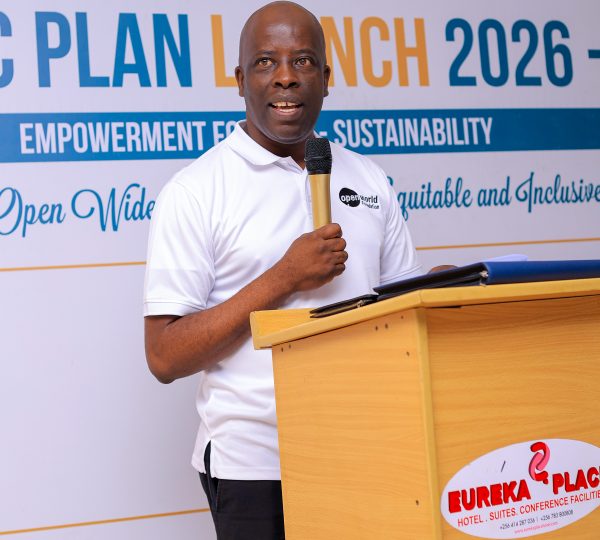
“This is the same dream and commitment that we carry into our next five years,” Mr. Asasira said. “We believe that every person, especially the young people, should live a healthier life, achieve quality education, and economic stability.”
He described the HELP Model in his own words, Health, Education, and Livelihood Projects, supported by a fourth pillar focused on Institutional Capacity, and confirmed the plan’s next phase of geographic growth: Karamoja, Eastern, Northern, and Western regions, added on top of the Central region OWF has covered for its first three years. He closed his welcome by naming the values guiding that growth: service above self, respect for humanity, inclusion, transparency, flexibility, and innovativeness.
The Board’s Reflection on the Journey
Board Chairperson Dr. Japheth Kwiringira spoke next, thanking guests for a presence he said reflected real confidence in the OWF’s work. He traced OWF’s growth from an idea into an organization now ready to be measured against a five year plan.
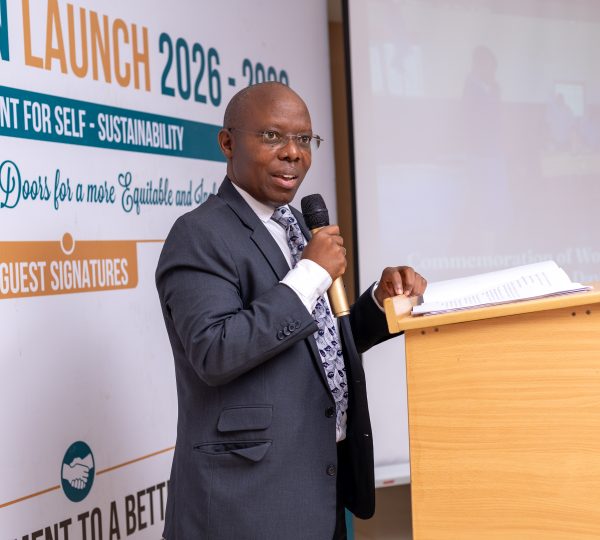
“We have built a strong foundation shaped by passion, dedication, resilience, technical expertise, and strategic collaboration,” Dr. Kwiringira said, “based on the understanding of the problems and needs of the people that we serve.”
He was careful to note that the plan was not written in isolation. It came out of consultations with communities, staff, technical experts, government agencies, academia, and civil society, a process he said marks OWF’s shift from an emerging organization into one that is structured, accountable, and credible. He closed with the line that we think best explains why this plan exists at all.
“This Strategic Plan is more than an institutional roadmap,” he said. “It is a promise to the young person whose education has been interrupted, to the household struggling to access healthcare and nutritious food, to the young woman seeking dignity and economic independence, and to the community searching for sustainable pathways out of poverty. It is a promise that vulnerability should not permanently determine a person’s future.”
What Government Sees in This Partnership
The Guest of Honour’s remarks, delivered on her behalf by Commissioner Mondo Kyateka, framed the plan inside a larger national picture. Civil society, she said, complements government by reaching underserved communities, mobilizing citizens, and generating the evidence needed to advocate for vulnerable people.
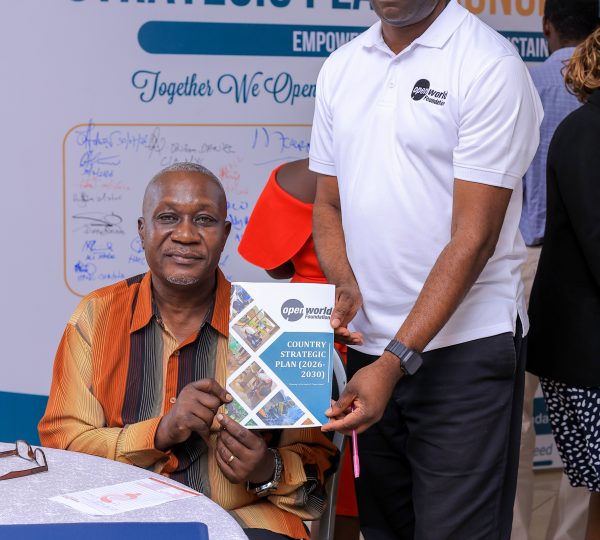 “Uganda has one of the youngest populations in the world,” the remarks read, “with approximately 75 percent of the population below the age of 35. This is one of our country’s greatest assets, and any investment in youths is meaningful investment.”
The figure quoted in her remarks differs from the 50.9 percent under 35 cited in OWF’s own plan materials, worth flagging rather than smoothing over. What was consistent was the challenge she posed to OWF directly: that potential in young people is only realized when they are healthy, educated, skilled, protected, and able to access real employment, and that this only happens through discipline, transparency, humility, and follow through, not ambition alone.
The Youth Council’s Perspective
National Youth Council Chairperson Daniel Ongom placed the plan next to the Council’s own mandate to organize, mobilize, protect, and engage youth in development. He pointed out how closely the two agendas already line up.
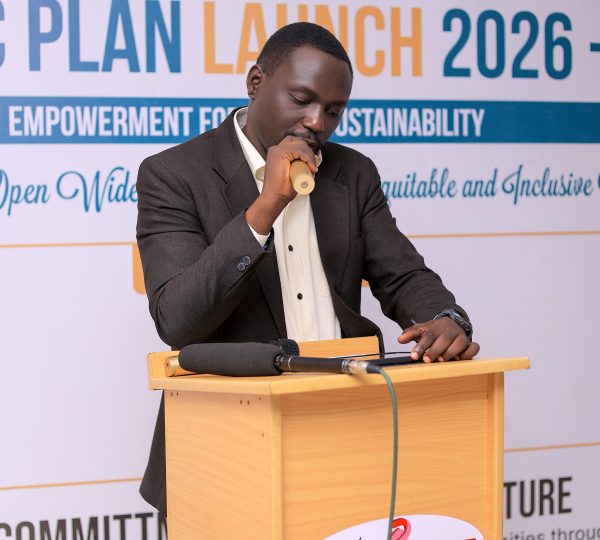 “OWF’s Livelihood Pillar responds directly to these needs,” Mr. Ongom said, “through skills development, enterprise support, and linkages to employers and markets.”
He committed the Council to supporting implementation directly, through youth mobilization, leadership development, health awareness, advocacy, research, and skills development, and offered a line that doubles as a fitting close to this whole day.
“I believe this will help in ensuring that the Strategic Plan is not only a document,” he said, “but a practical guide to building sustainable actions that will fundamentally improve the lives of young people.”
Four speeches, four vantage points, one plan. What they shared was not a script, but a direction: young people at the center, and an organization asking to be held to what it just promised.
